
Why Landing Technique Matters
Landing generates forces of 5-11 times your body weight. Poor technique concentrates these forces on vulnerable structures like your ACL, patellar tendon, and ankle ligaments. Research shows that proper landing mechanics can reduce injury risk by 50-70%.
The Perfect Landing
Initial Contact
Absorption Phase
The Sound Test
A proper landing is quiet. Loud, slapping landings indicate poor force absorption and higher injury risk.
Common Landing Errors
Stiff-leg landing: Knees barely bend, all force goes to joints.
Fix: Practice drop landings focusing on deep knee bend.
Knee valgus: Knees collapse inward on landing.
Fix: Strengthen glutes, practice landing with knees tracking over toes.
Asymmetrical landing: More weight on one leg.
Fix: Single-leg landing drills, address strength imbalances.
Landing too narrow: Feet close together reduces stability.
Fix: Practice landing with feet shoulder-width apart.
Landing Drills
Drop landings: Step off a low box (12-18 inches), land and hold for 3 seconds. Focus on perfect form. 3 sets of 5.
Depth jumps with pause: Drop, land, pause 2 seconds, then jump. Reinforces proper landing position.
Single-leg landings: Progress to single-leg once double-leg is mastered.
Video analysis: Record yourself landing and review for errors.
Sport-Specific Considerations
Basketball: Practice landing after contested shots and rebounds.
Volleyball: Train landing after blocking and attacking.
All sports: Practice landing on different surfaces and in fatigued states.
Build It Into Every Session
Include 5-10 landing drills in every warm-up. Quality over quantity—stop when form breaks down.
This information is for educational purposes only. If you experience pain during landing, consult a sports medicine professional before continuing jump training.
Disclaimer
This article is for informational purposes only and does not constitute medical advice. Individual results may vary. Consult a qualified professional before starting any training program.
Ready to measure your jump?
Find out your vertical jump height in 60 seconds
Related Articles

Ankle Sprain Prevention for Basketball: Protect Your Ankles
Learn how to prevent ankle sprains in basketball and jumping sports. Evidence-based strategies including exercises, taping, and proper footwear.
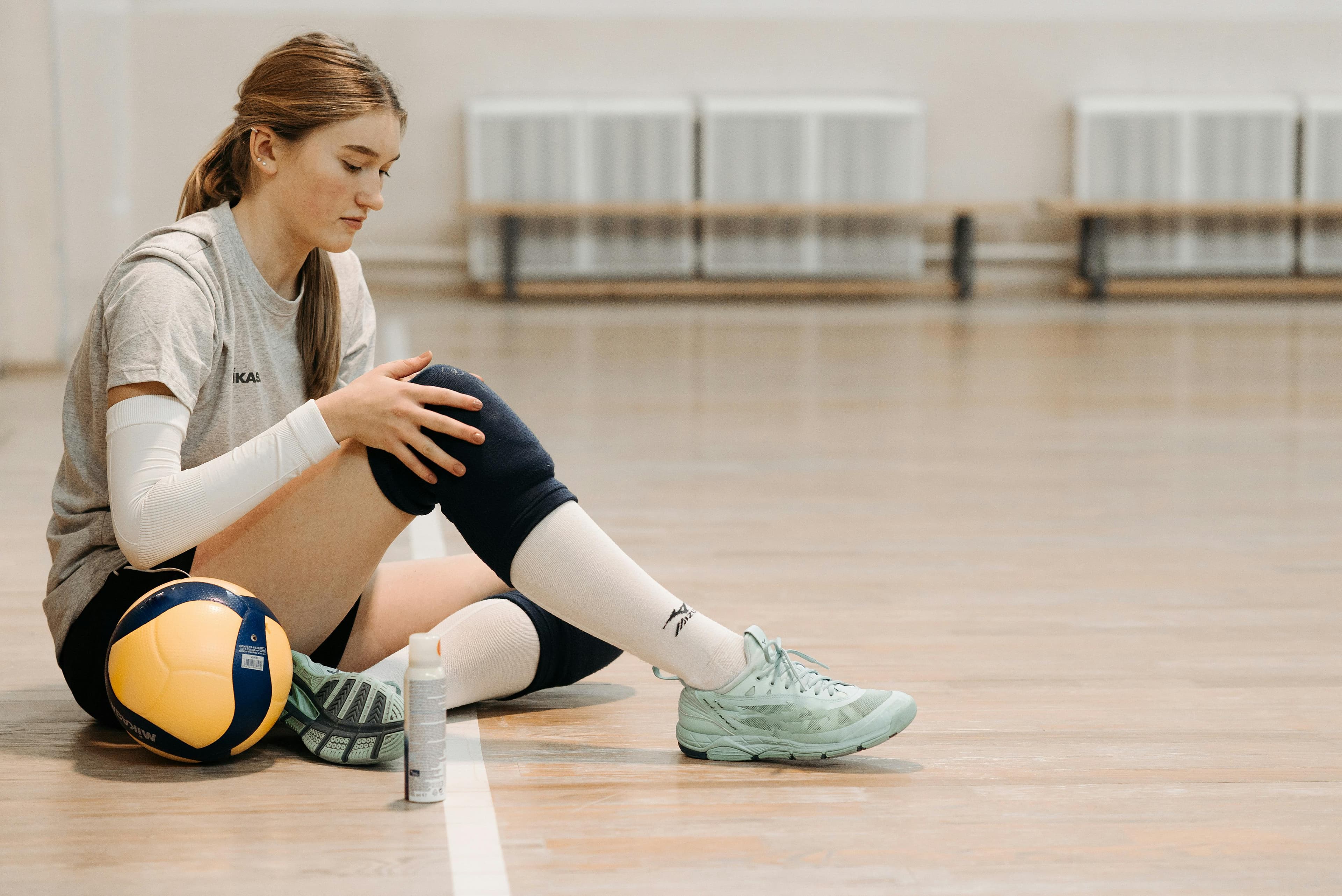
How to Prevent Knee Pain from Jumping: Complete Guide
Evidence-based strategies to prevent knee pain from jump training. Learn proper mechanics, strengthening exercises, and recovery protocols.
Jumper's Knee Treatment: Recovery Guide for Athletes
Evidence-based treatment options for jumper's knee (patellar tendinopathy). Learn rehabilitation exercises, recovery timelines, and when to seek help.