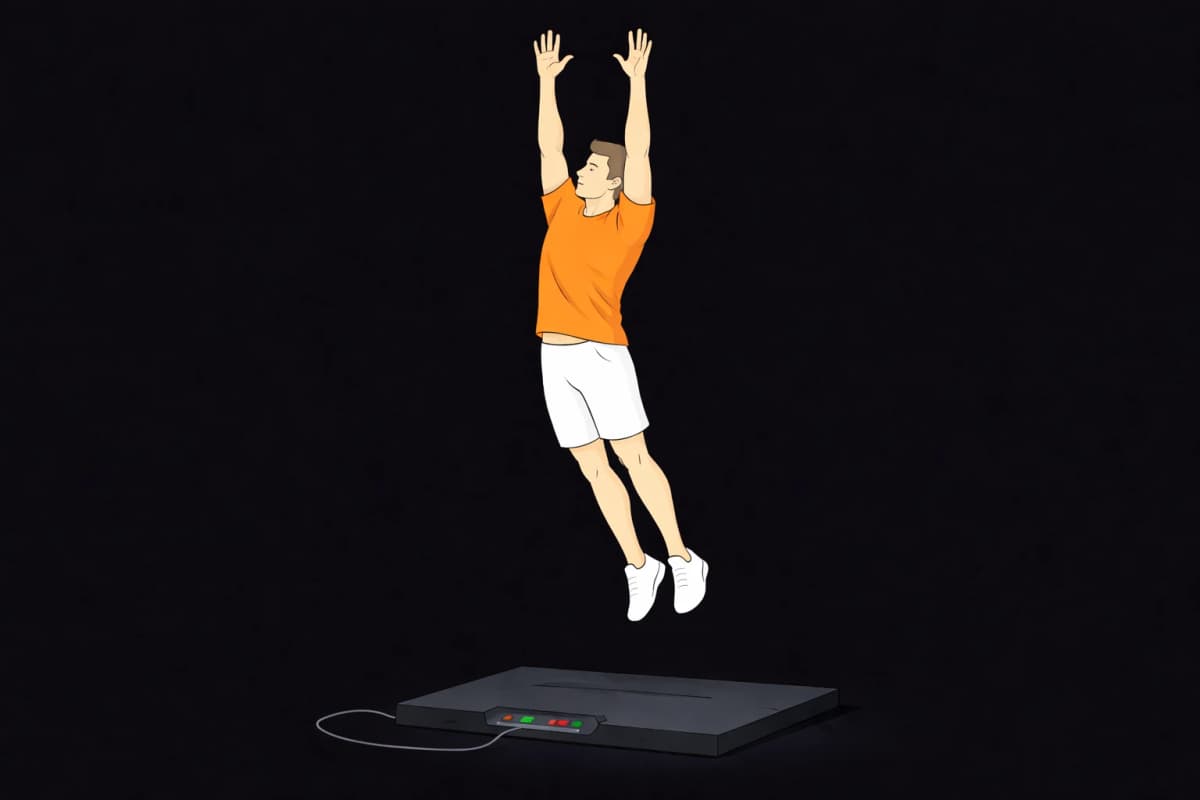
Average Vertical Jump (By Age, Gender, Sport & NBA Data)
Find the average vertical jump by age, gender, and sport, including NBA draft combine benchmarks. Compare standing and box jump standards with data charts.
Free Vertical Jump Test
Measure your vertical jump in 60 seconds
What Is the Average Vertical Jump?
Quick Answer
The average vertical jump for adults is 16-20 inches (41-51 cm) for men and 12-16 inches (30-41 cm) for women, with performance peaking in the late 20s and declining approximately 2-3 inches (5-8 cm) per decade after age 30.
Average Vertical Jump by Age
The average vertical jump by age reflects changes in muscle mass, neuromuscular efficiency, and tendon stiffness. Peak performance occurs between 18-29 before gradually declining.
| Age Group | Average Male Vertical Jump | Average Female Vertical Jump | Trend |
|---|---|---|---|
| 6-11 |
8-12 in
25-33 cm
|
8-12 in
25-33 cm
|
Developing |
| 12-17 |
16-18 in
40-45 cm
|
12-16 in
30-40 cm
|
Improving |
| 18-29 |
18-20 in
45-51 cm
|
14-16 in
36-41 cm
|
Peak |
| 30-39 |
16-20 in
43-51 cm
|
12-16 in
30-46 cm
|
Gradual decline |
| 40-49 |
14-16 in
36-41 cm
|
10-16 in
25-41 cm
|
Moderate decline |
| 50-59 |
11-14 in
28-36 cm
|
8-14 in
20-36 cm
|
Accelerated decline |
| 60-79 |
8-11 in
20-28 cm
|
6-9 in
15-22 cm
|
Steep decline |
These values refer to the average standing vertical jump, not a running or box jump.
Average Standing Vertical Jump by Gender
On average, men jump 4-6 inches (10-15 cm) higher than women due to:
- Greater lean muscle mass
- Higher testosterone levels
- Larger proportion of fast-twitch muscle fibers
The Average Jump Height by Gender
|
Men
16-20 in
40-50 cm
Average Vertical Jump Male
|
Women
12-16 in
30-40 cm
Average Vertical Jump Female
|
What Is a Good Standing Vertical Jump?
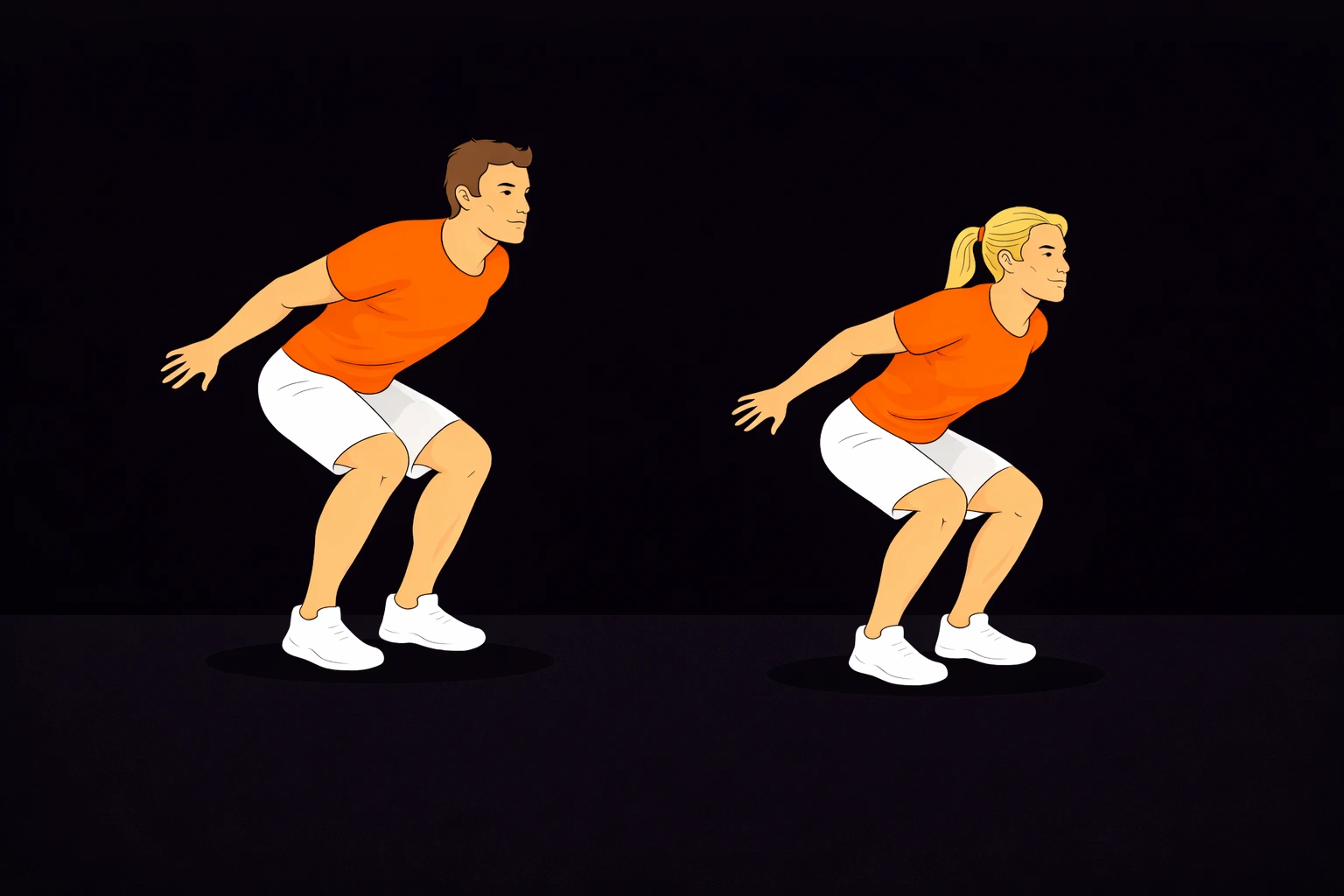
The table below shows the average standing vertical jump for adult men and women, categorized by performance level. A “good” vertical jump depends on age, sex, and training background.
| Performance Level | Standing Vertical Jump (Men) | Standing Vertical Jump (Women) |
|---|---|---|
| Below Average |
<16 in
<41 cm
|
<12 in
<30 cm
|
| Average |
16-20 in
41-51 cm
|
12-16 in
30-41 cm
|
| Good |
20-24 in
51-61 cm
|
16-20 in
41-51 cm
|
| Very Good |
24-28 in
61-71 cm
|
20-24 in
51-61 cm
|
| Elite |
28+ in
71+ cm
|
24+ in
61+ cm
|
Is a 30 Inch Vertical Good?
A 30-inch (76 cm) vertical jump is considered excellent for recreational athletes and falls within the “elite” category for most adult men.
What is a Good Average Vertical Jump for a 13 Year Old?
Growth and puberty significantly influence results at this age.
| Age | Boys | Girls |
|---|---|---|
| 13 | 14.5 in36 cm | 12 in30 cm |
Average Vertical Jump NBA
Many people assume that all NBA players jump 40 inches or more. However, this is not the case. The average NBA vertical jump at the draft combine is approximately 28-29 inches (71-74 cm) for the standing vertical and 34-35 inches (86-89 cm) for the max running vertical.
| Vertical Jump Test | NBA Performance | What it shows |
|---|---|---|
| Standing Vertical Jump |
28-29 in
71-74 cm
|
Pure lower-body explosiveness |
| Running Vertical Jump |
34-35 in
86-89 cm
|
Speed-to-power conversion |
Professional athletes outperform the general population due to long-term athletic development and structured strength training.
Average Vertical Jump by Sport
Vertical jump performance varies significantly depending on sport-specific demands. Explosive sports such as basketball and volleyball require higher vertical jump ability compared to endurance-based sports. The table below compares typical standing vertical jump ranges across major sports.
| Sport | Average Vertical Jump (Men) | Average Vertical Jump (Women) |
|---|---|---|
| Basketball |
28-34 in
71-86 cm
|
20-28 in
51-71 cm
|
| Volleyball |
24-30 in
61-76 cm
|
18-24 in
46-61 cm
|
| Soccer |
20-26 in
51-66 cm
|
14-20 in
36-51 cm
|
| Track & Field |
30-36 in
76-91 cm
|
22-30 in
56-76 cm
|
Average Box Jump Height by Age
Box jumps allow higher clearance because of hip flexion and landing mechanics.
| Age Group | Average Box Jump Height (Men) | Average Box Jump Height (Women) |
|---|---|---|
| 13-17 |
18-28 in
46-71 cm
|
14-22 in
36-56 cm
|
| 18-29 |
20-32 in
51-81 cm
|
16-26 in
41-66 cm
|
| 30-49 |
18-28 in
46-71 cm
|
14-22 in
36-56 cm
|
| 50+ |
12-22 in
30-56 cm
|
10-18 in
25-46 cm
|
Jump Height as a Fitness Benchmark
The average vertical jump by age is more than just a statistic. It is a science-based benchmark for assessing lower-body power in adults and is widely used in the literature to evaluate overall physical fitness.
Standing Vertical Jump as a Fitness Benchmark
|
Explosive Power
Indicator of Explosive Strength
It reflects the amount of force your legs can generate.
|
Age benchmarks
Indicator of Functional Health
It reflects long-term mobility and physical independence.
|
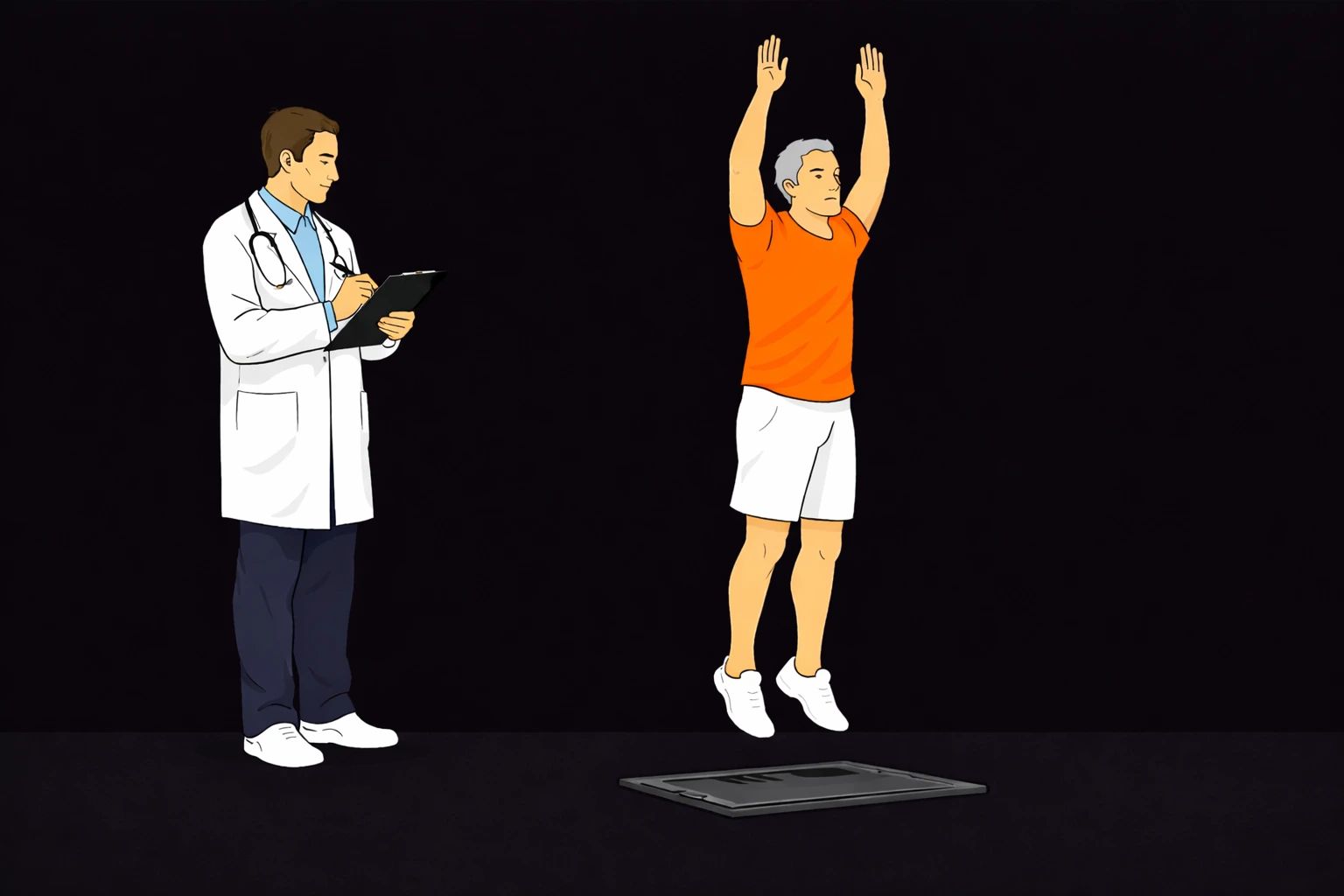
Jump Height as an Indicator of Explosive Strength
Vertical jump height directly measures how efficiently the body produces force. Since explosive power declines earlier than strength, changes in vertical jump height can reveal early declines in physical capacity.
Jump Height as an Indicator for Functional Health
Vertical jump height reflects neuromuscular efficiency and muscle mass and correlates strongly with overall health.
Research links the average standing vertical jump to:
- Overall physical fitness
- Bone density
- Mobility and independence
- Fall risk in older adults
Why Does Average Vertical Jump Decline With Age?
The average vertical jump for both men and women peaks in the 20s and declines thereafter due to age-related loss of muscle mass and lower-body power. As explosive strength decreases, vertical jump height becomes a practical indicator of functional health.
Contributing factors include:
- Loss of muscle mass
- Decreased joint mobility
- Reduced tendon stiffness
- Reduced testosterone levels
- Decline in fast-twitch fiber function
How to Measure Vertical Jump
Guide for Vertical Jump Testing
|
Step 1
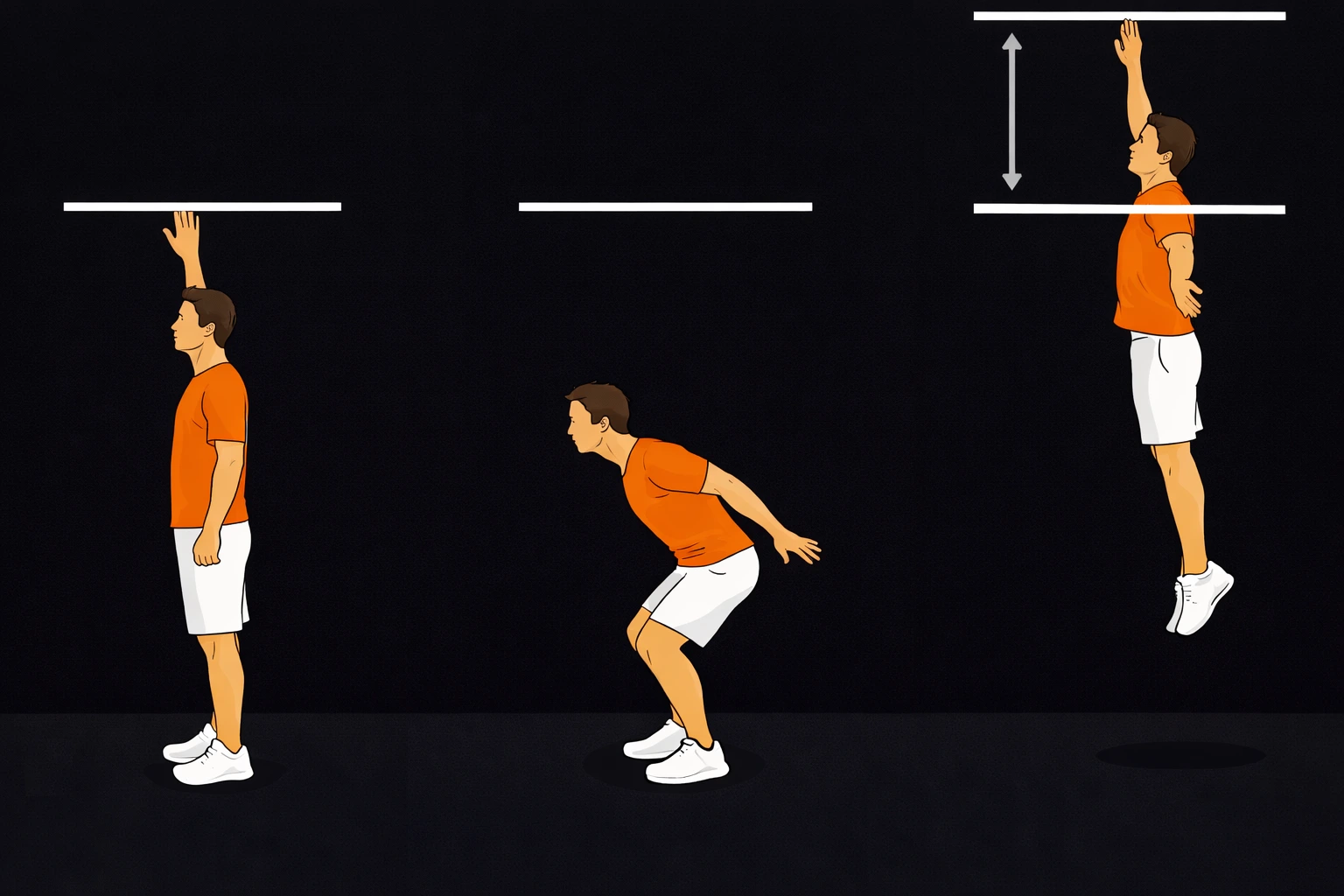
Standing Reach
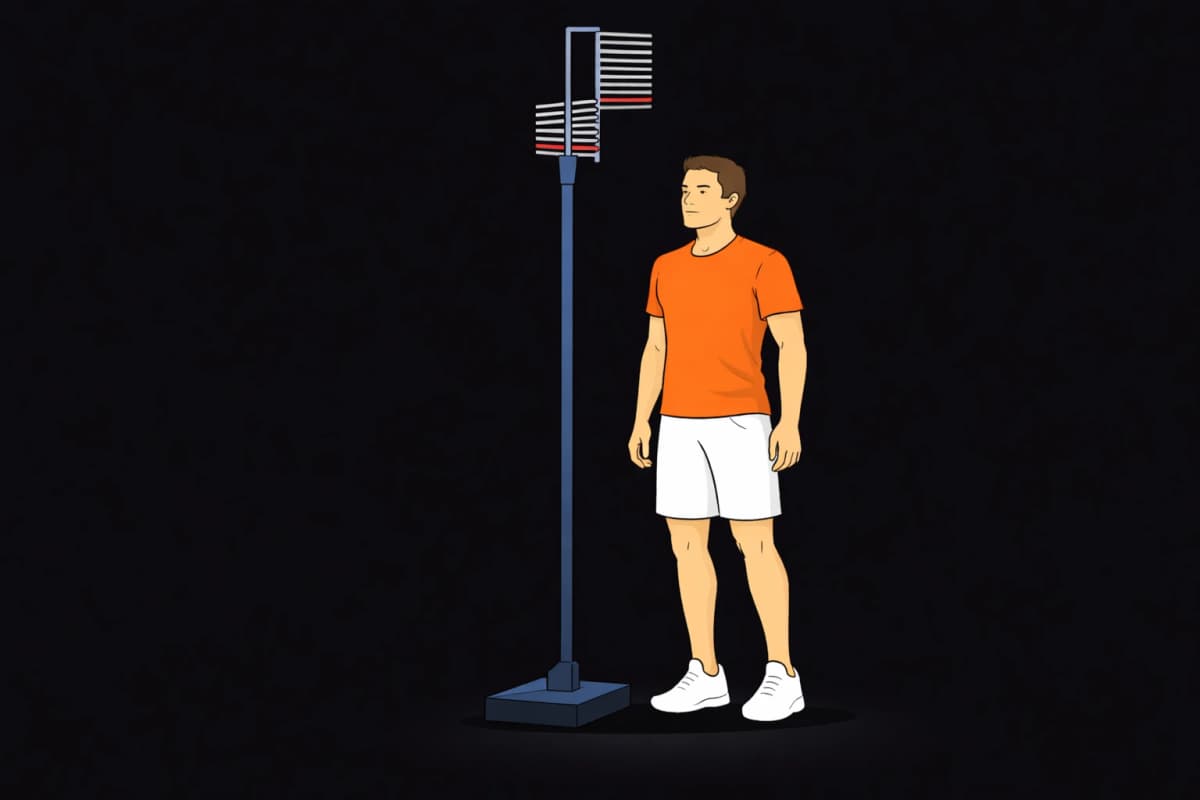
Place chalk or tape on your fingertips and mark your standing reach on a wall.
|
Step 2
Max Jump Reach
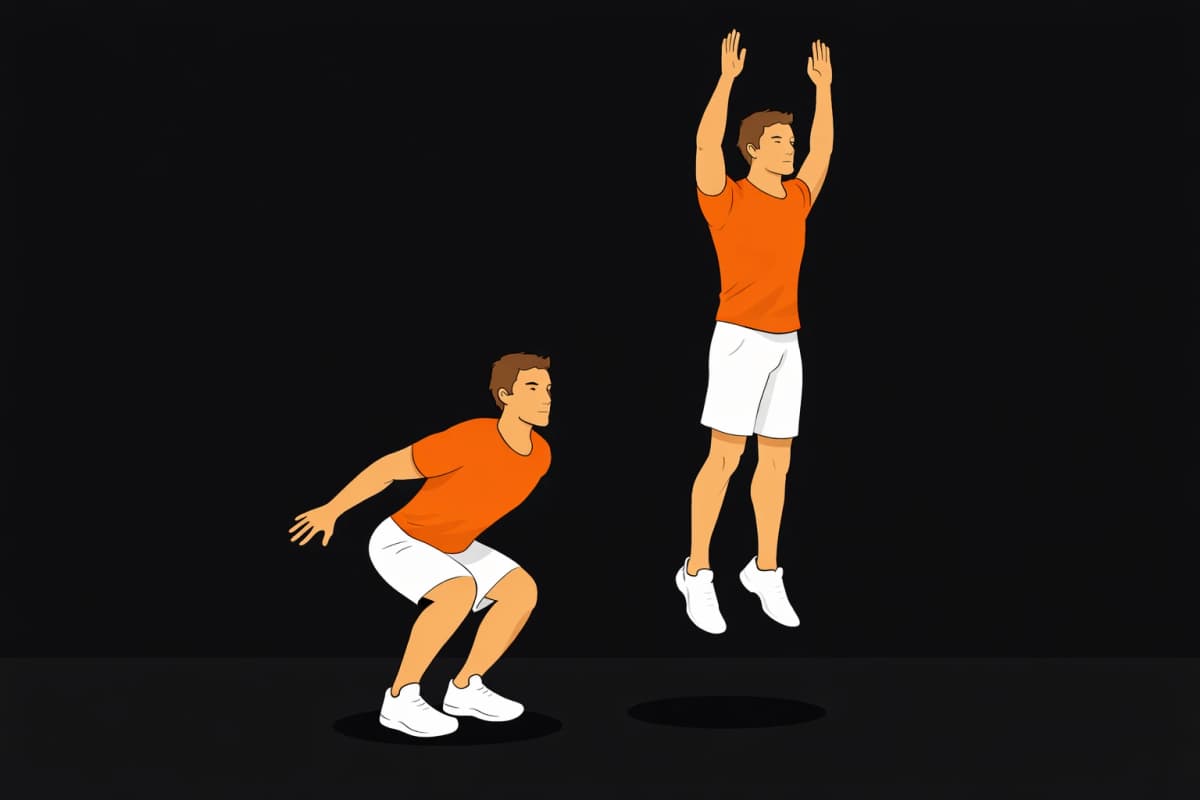
Then jump and touch the wall at your highest point to create a second mark.
|
Result
Calculate the Difference
Measure the distance between the two marks. That difference is your vertical jump height.
|
Final Takeaway
The average vertical jump varies by age, sex, sport, and training background, but remains one of the most practical indicators of physical fitness. Tracking your standing vertical jump over time provides a simple and reliable way to assess athletic development and functional health.
Key Numbers
- Men typically jump 16 to 20 inches (41-51 cm)
- Women typically jump 12 to 16 inches (30-41 cm)
- Typical box jump heights are 20 to 32 inches (50-81 cm)
- The NBA draft combine averages are 28 to 29 inches (71-74 cm)
If your results fall below average, structured strength and plyometric training can significantly improve vertical jump height.
Free Vertical Jump Test
Measure your vertical jump in 60 seconds
Sources
- Age- and Sex-Specific Changes in Lower-Limb Muscle Power Throughout the Lifespan - Journals of Gerontology
- Is lower limb muscle power by vertical jump a sensitive and specific measure for screening sarcopenia compared to handgrip strength and chair stand test?
- Jump test performance and sarcopenia status in men and women, 55 to 75 years of age
- Vertical Jump Tests: A Safe Instrument to Improve the Accuracy of the Functional Capacity Assessment in Robust Older Women
- Peak Vertical Jump Power as a Marker of Bone Health in Children
- Vertical jump in female and male basketball players--a review of observational and experimental studies
- Comparison of vertical jump performance between female collegiate basketball and volleyball athletes