Dunk Calculator
Tap the ball to start
How the Dunk Calculator Works
The dunk calculator combines your standing reach and maximum reach on a standard 10-foot (305 cm) basketball rim using a full running approach jump. First, the tool calculates your standing reach based on your height and wingspan using biomechanical formulas. This functions as an integrated standing reach calculator. Next, it determines your vertical jump by subtracting your standing reach from your maximum reach on the basketball rim. This acts as a built-in vertical jump calculator. Then, it calculates the additional vertical jump required to bridge the gap between your current maximum reach and the height needed to dunk a basketball. By combining these calculations, the tool operates as a complete dunk height calculator.
Step 1 - Enter Your Height and Wingspan
Enter your height and wingspan to determine your natural standing reach. These measurements form the foundation of your vertical jump calculation.
Step 2 - Set Your Maximum Reach on the Rim
Use the interactive hoop to set your maximum reach during a full running approach jump. This defines your current jumping ability relative to a 10-foot basketball rim.
Step 3 - View Your Dunk and Vertical Jump Results
Instantly see your standing reach, vertical jump, and the exact height needed to dunk on a 10-foot rim.
Step 4 - View Advanced Performance Metrics
Beyond your standing reach and vertical jump, the calculator also displays advanced metrics such as your Explosiveness Index, Relative Jumping Power, and Jump Efficiency to provide deeper insight into your overall jumping performance.
What Is a Good Vertical Jump?
What counts as a good vertical jump depends on your age, sex, sport, and training level. A recreational athlete and an NBA prospect are measured against very different standards. Below are the vertical jump benchmarks for men and women to help you understand where you stand.
Good Vertical Jump for Men
For untrained men, a vertical jump of 16 to 20 inches is typical. Recreational athletes who train regularly usually reach 20 to 24 inches. Competitive basketball and volleyball players often jump between 24 and 28 inches. At the elite and NBA level, vertical jumps of 28 to 40 inches or more are common. Any vertical above 24 inches puts you well above the average male vertical jump.
Good Vertical Jump for Women
The average female vertical jump for untrained women ranges from 10 to 14 inches. Recreational athletes typically reach 14 to 18 inches, while competitive players jump between 18 and 24 inches. Elite female athletes can exceed 24 inches.
What Is the Average Vertical Jump?
The average vertical jump varies significantly based on age, fitness level, and training background. Understanding the typical vertical jump height helps you set realistic goals and measure progress.
Average Standing Vertical Jump
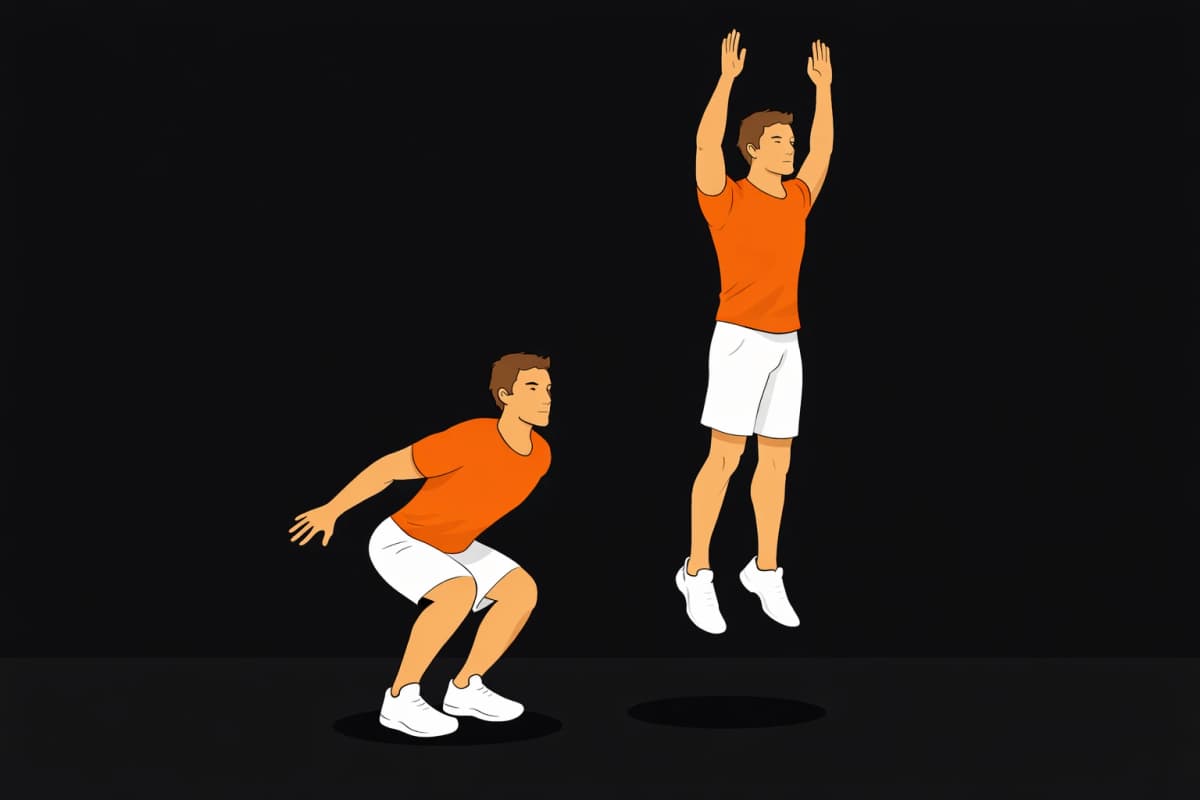
A standing vertical jump is performed without a running approach or step, making it a pure test of lower-body explosiveness. The average standing vertical jump for men is approximately 16 to 20 inches, which is typically 4 to 6 inches lower than a running approach vertical. Women average 12 to 16 inches on the standing vertical jump.
Average Vertical Jump by Age
Vertical jump ability changes with age. Athletes aged 13 to 14 typically jump 14 to 18 inches, while those aged 15 to 17 reach 17 to 22 inches. The peak performance window falls between ages 18 and 25, with averages of 19 to 24 inches for men. After age 30, vertical jump declines gradually, though consistent training can slow this trend. For a 13-year-old, anything above 18 inches is above average.
What Is the Average Vertical Jump in the NBA?
NBA players are among the most explosive athletes in the world. The average vertical jump in the NBA is roughly 28 inches for the standing test and 34 inches for the max vertical. These numbers come from testing at the annual NBA Draft Combine, where prospects are measured under standardized conditions. Outliers like Zach LaVine and DJ Stephens have posted max verticals above 46 inches.
NBA Draft Combine Vertical Jump
The NBA Draft Combine measures both standing vertical and max vertical jump for all prospects. Recent NBA Draft Combine results show that the average standing vertical sits around 28 inches, while the running vertical jump averages roughly 34 inches. The difference of 4 to 6 inches between standing and running vertical is consistent across most athletes. Combine data is publicly available and updated each year.

Highest Vertical Jump Ever Recorded
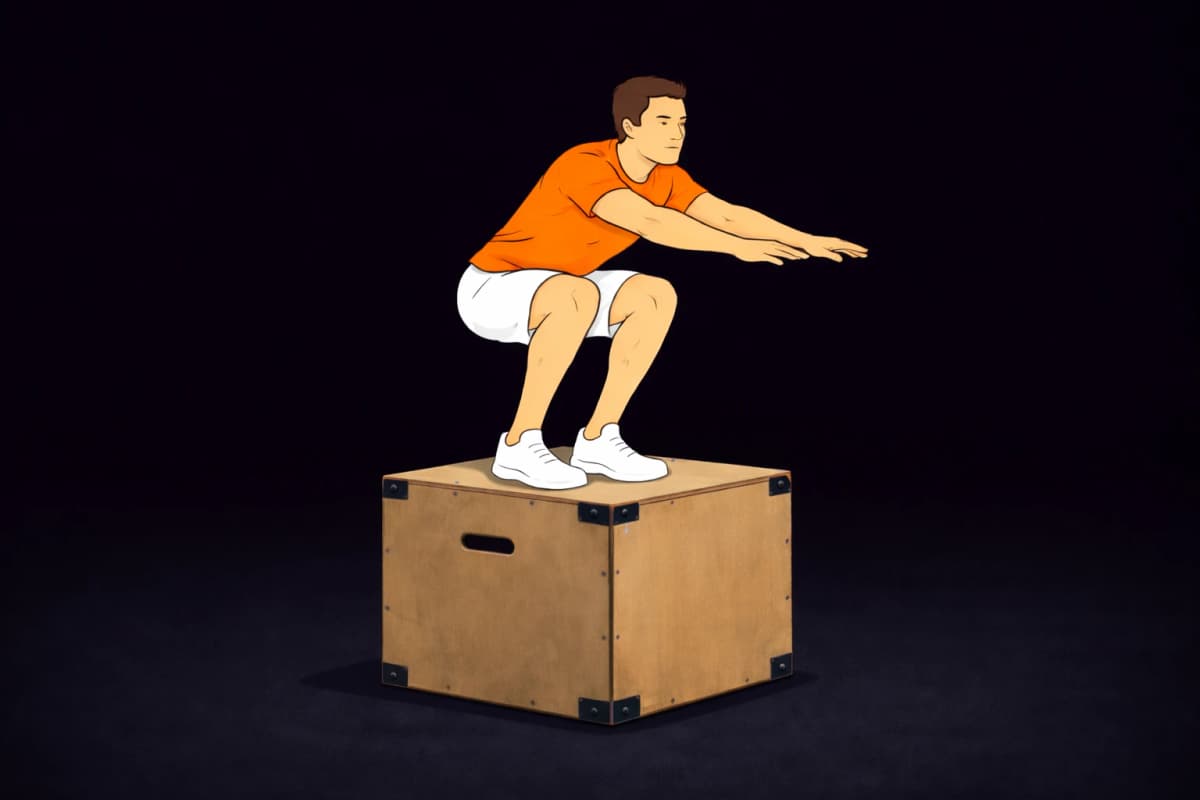
The highest vertical jump ever recorded in an official setting belongs to DJ Stephens, who posted a 46-inch max vertical at the 2013 NBA Draft Combine. Kadour Ziani, a professional dunker, has claimed a vertical above 60 inches, though this was never verified under lab conditions. Brett Williams went viral with a 67-inch box jump, but a box jump is not the same as a true vertical leap. The realistic ceiling for how high humans can jump is approximately 46 to 48 inches based on current biomechanical data.
Read the full story behind the highest vertical jumps in historyHow to Increase Your Vertical Jump
The vertical jump is one of the most trainable athletic qualities. Most athletes can gain 4 to 12 inches with a structured program focused on three pillars: strength, plyometrics, and technique. Whether you want to learn how to jump higher for basketball or improve your vertical for volleyball, the principles are the same.
Vertical Jump Training Program
The best vertical jump training programs follow an 8- to 12-week periodized structure. Phase 1 builds a strength base with squats, deadlifts, and lunges. Phase 2 converts that strength into power using Olympic lifts and weighted jumps. Phase 3 focuses on peaking with reactive plyometrics. Our training program is calculated from your test results and follows this proven approach.
Plyometrics for Basketball and Volleyball
Plyometrics for basketball include depth jumps, box jumps, and single-leg bounds that build explosive takeoff power. For volleyball, approach jumps and repeated vertical jumps mimic game demands. How to jump higher in volleyball comes down to training the right movement patterns. Training plyometrics 2 to 3 times per week with 48 hours of recovery between sessions delivers the best results.
Workouts to Increase Vertical
The most effective workouts to increase vertical combine heavy compound lifts with explosive movements. Back squats, trap bar deadlifts, Bulgarian split squats, and calf raises build maximal strength. Box jumps, depth jumps, and single-leg hops convert that strength into vertical power. Progressive overload each week is the key to consistent gains.

How to Measure Your Vertical Jump at Home
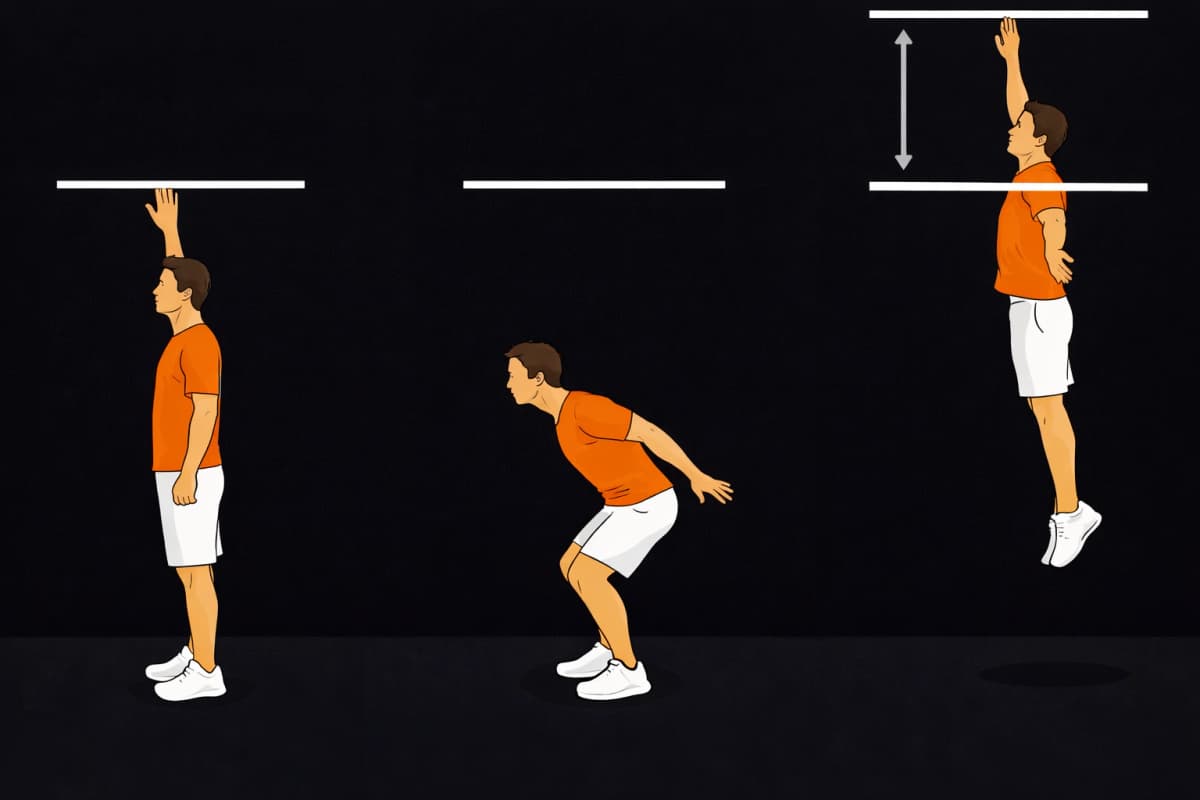
There are several ways to measure your vertical jump at home. The simplest method is the wall chalk test: mark your standing reach on a wall, then jump and touch as high as possible. The difference is your vertical jump. You can also use our dunk calculator, which estimates your vertical from your height and standing reach against a rim or backboard. Dedicated vertical jump testing equipment like a Vertec device or jump mat provides lab-grade accuracy but is not necessary for most athletes.