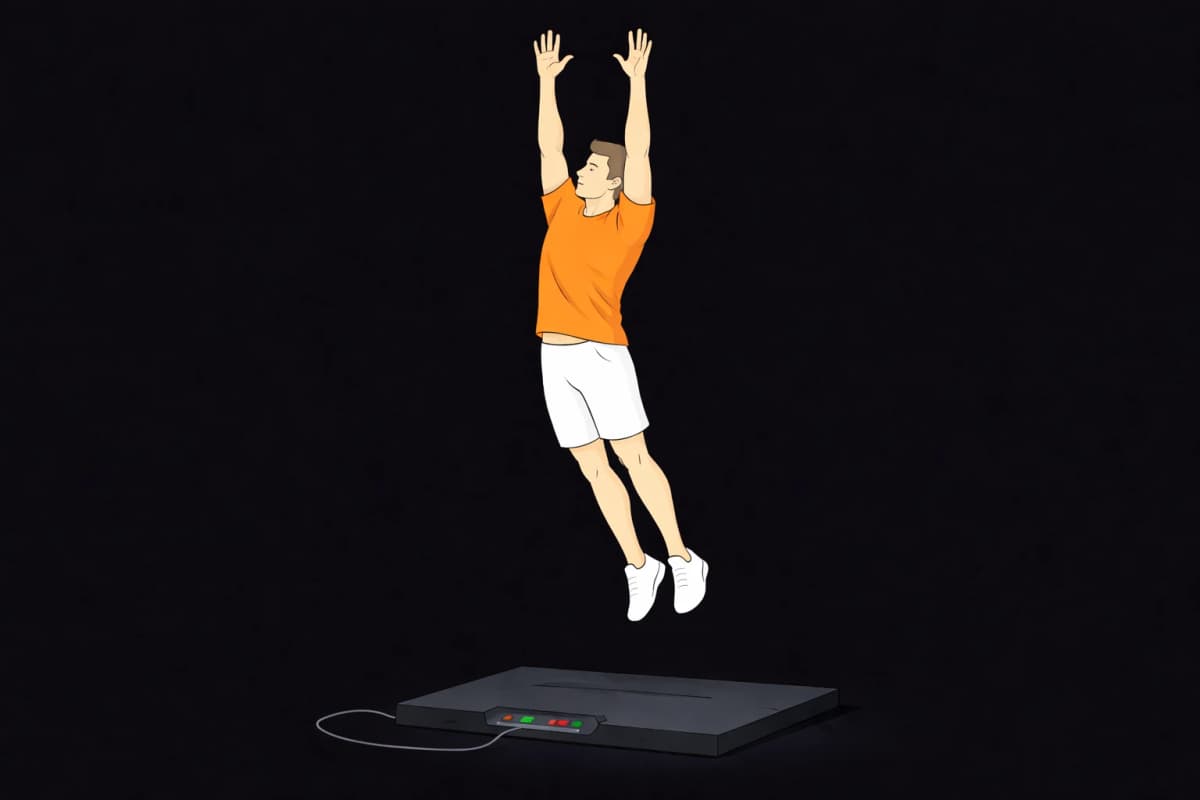
How to Measure Vertical Jump
Complete guide to vertical jump testing, including a vertical jump calculator, how to perform a vertical jump test, and use vertical jump testing equipment.
Free Vertical Jump Test
Measure your vertical jump in 60 seconds
How to Measure Vertical Jump Accurately
If you’re wondering how to measure your vertical jump, the key is consistency. Proper vertical jump testing requires a standardized setup, a correct standing reach measurement, and using the same method every time. Whether you want to know how to measure vertical jump at home or how professionals test it using advanced vertical jump testing equipment, this blog covers everything.
Method 1: How to Test Vertical Jump at Home (Wall & Chalk)
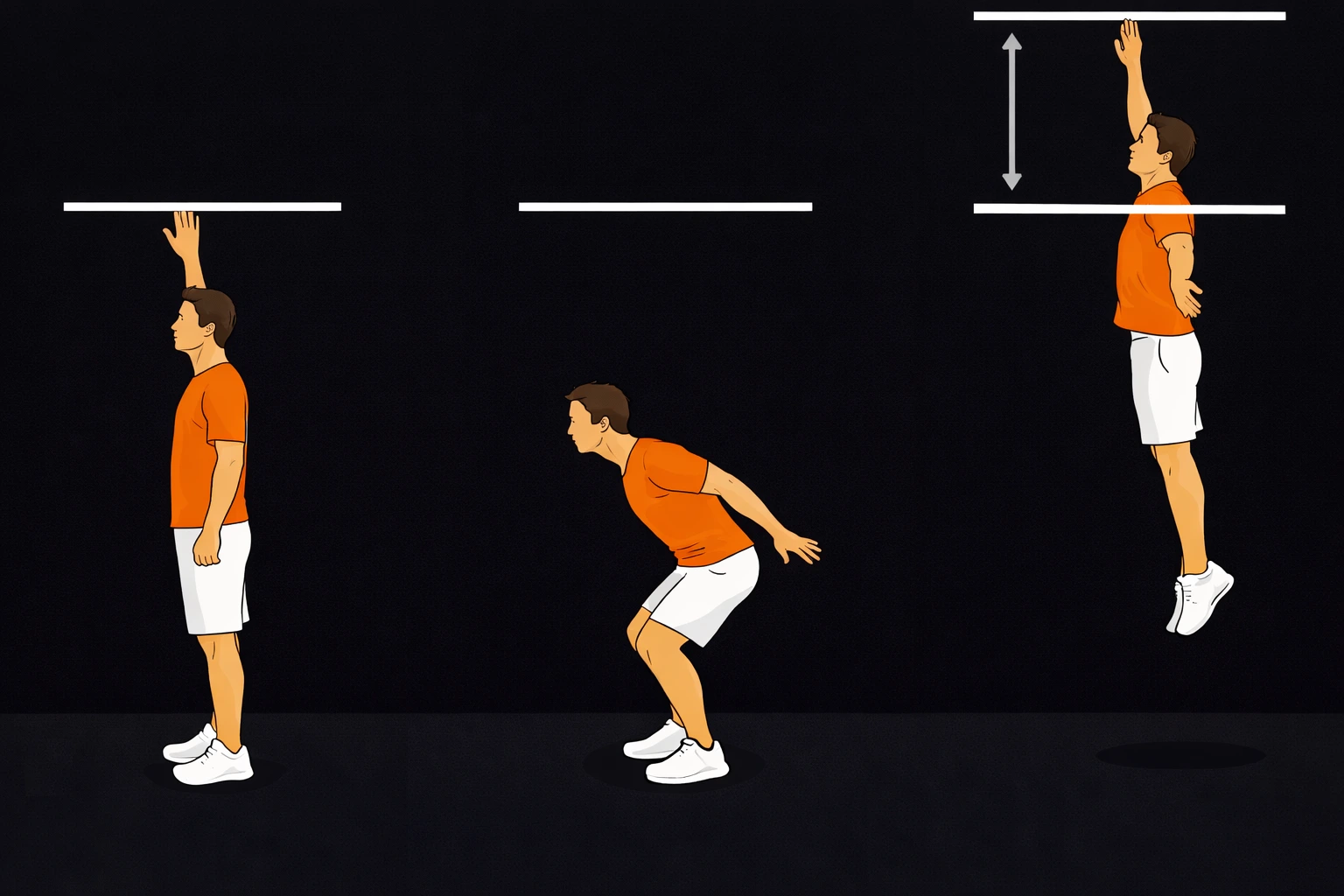
This is the simplest and most reliable setup:
- Put chalk or tape on your fingertips
- Mark your standing reach
- Jump and hit the wall at peak height
- Measure the distance between marks
That difference is your vertical jump test result.
This method remains one of the most practical forms of vertical jump testing because it directly measures reach height.
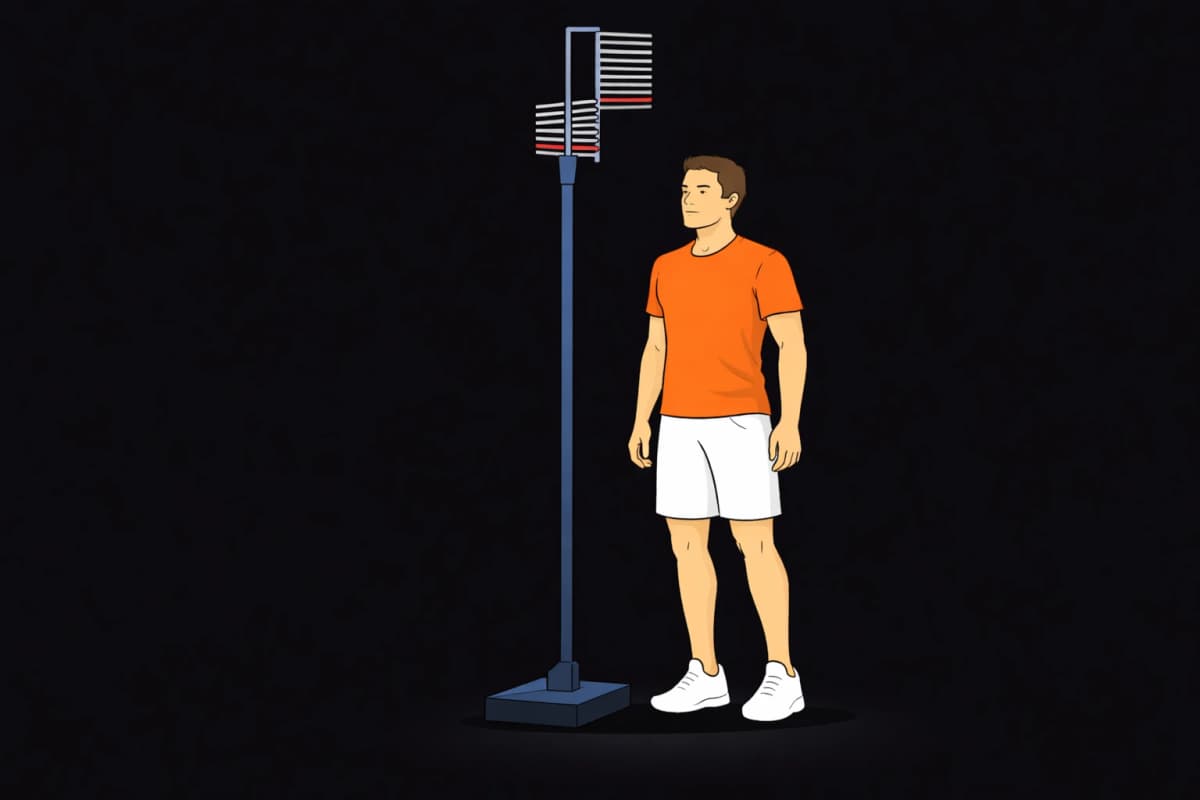
Method 2: How to Measure Vertical Jump with Vertec

A Vertec is common vertical jump testing equipment used in combines and performance labs.
How it works
- Adjust the vanes to your standing reach
- Jump and swipe the highest vane possible
- Read the height directly from the vertec
If you’re researching how to measure vertical jump with Vertec, understand that it measures reach-based height just like wall and chalk, but with greater consistency and it's more fun.
Method 3: Jump Mat / Force Plate
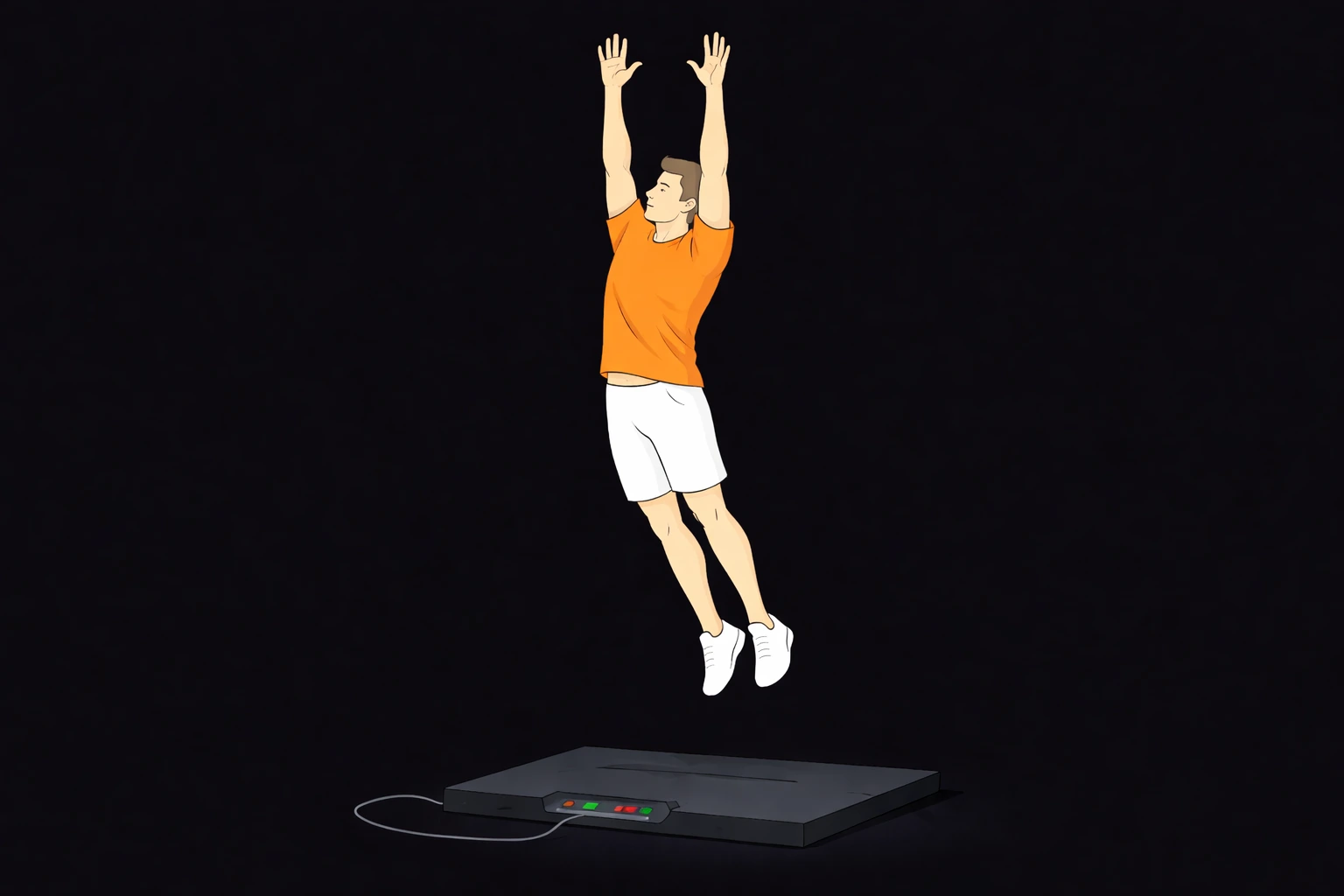
A vertical jump test mat or force plate calculates jump height using flight time.
Process:
- Stand on the mat
- Perform a maximal jump
- The system estimates your vert from airtime
This form of vertical jump testing equipment is fast and convenient, but results are calculated differently than reach-based methods. Do not mix test types when tracking progress.
Vertical Jump Testing Methods Compared
| Method | Measures | Best for |
|---|---|---|
| Wall & Chalk | Reach height difference (max jump reach − standing reach) | How to measure vertical jump at home (no equipment) |
| Vertec | Reach height difference (swipe highest vane) | Combine-style vertical jump testing |
| Jump Mat | Flight time estimate | Fast vertical jump test setup + repeatability |
| Force Plate | Flight time + power metrics (force, RFD) | Lab-grade vertical jump testing equipment |
How to Measure a Vertical Jump (Step-by-Step)
Step 1: Measure Standing Reach
Standing reach is how high you can reach when flat-footed with your arm fully extended.
- Stand sideways next to a wall
- Keep both feet flat
- Reach up with your dominant arm fully
- Mark the highest point
- Measure from floor to mark
Common mistake
Don’t shrug your shoulder up or lean into the wall. That inflates your standing reach. Consistency here determines accurate vertical jump testing.
Step 2: Measure Max Jump Reach
This determines how high you actually jump.
1) Standing vertical jump (CMJ)
- Feet about shoulder-width apart
- Triple extension (hips, knees, ankles)
- Swing arms explosively
- Jump maximal effort
- Mark the highest point
2) Running vertical jump
- Take three controlled approach steps
- Plant your takeoff foot with force
- Swing arms explosively
- Drive knee upward
- Mark the highest point
If your approach jump is only slightly higher than your standing jump, technique improvement may increase your vertical leap significantly.
Step 3: Calculate Vertical Jump Height
Vertical jump height = max jump reach - standing reach
Example:
- Standing reach: 8'0"
- Max jump reach: 10'6"
- Vertical jump: 10'6" - 8'0" = 30"
Always log both values for reliable vertical jump testing progress.
What Kinds of Other Vertical Jump Tests Exist?
| Test type | What it shows | Best for |
|---|---|---|
| Standing vertical | Pure explosiveness + force production | Tracking training progress |
| Running vertical | Max height with speed + technique | Dunking + game-like jumping |
Track both, but don’t compare them directly. They’re different tests and measure different athletic qualities.
How Often Should You Test Your Vertical Jump?
For consistent data:
- Test every 4 weeks
- Use the same method
- Same court & shoes
- Same warm-up
- Same jump style
Standardization is more important than equipment.
Common Vertical Jump Testing Errors
| Mistake | Why it hurts accuracy | Fix |
|---|---|---|
| Inconsistent standing reach | Small changes in shoulder position change your baseline | Fix: Same stance, same arm, no shrug |
| No warm-up | A cold test is usually a low test | Fix: Use the same warm-up every time |
| Testing while fatigued | Heavy training lowers jump performance | Fix: Test fresh or on a recovery day |
| Mixing test methods | Jump mats estimate height differently than reach-based tests | Fix: Don’t alternate between wall&chalk and a jump mat |
| Changing your environment | Surface, shoes, and grip change how you jump | Fix: Same shoes, same floor, same setup |
Quick Answer
If you want to know how to measure vertical jump correctly, measure your standing reach, measure your max jump reach, and subtract the difference. Use the same vertical jump testing method every time, whether that’s wall and chalk, Vertec, or a vertical jump test mat.
Free Vertical Jump Test
Measure your vertical jump in 60 seconds
Sources
- The reliability of three devices used for measuring vertical jump height - Journal of Strength and Conditioning Research
- Vertical-jump Tests: A Critical Review - Strength & Conditioning Journal
- NBA Draft Combine Measurements - NBA.com
- Countermovement Jump Analysis - Sports Medicine
- Photobiomodulation therapy and NMES improve muscle strength and jumping performance in young volleyball athletes: a randomized controlled trial study in Brazil